 EN
EN

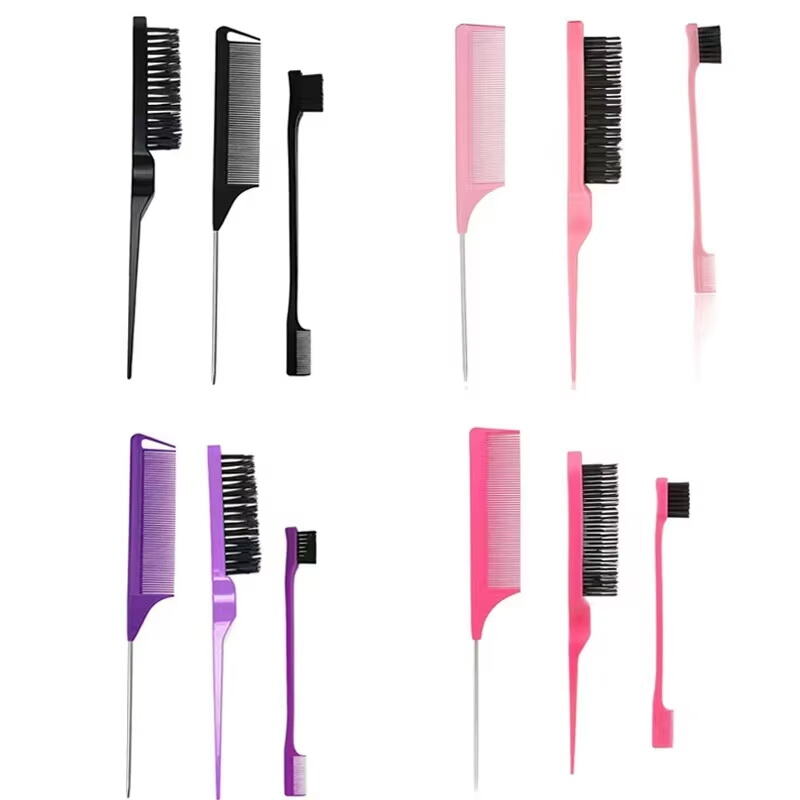
Hair tangling remains one of the most persistent grooming challenges for children, individuals with fine or curly hair, and professionals managing hair care in pediatric or salon environments. The question of whether a compact grooming tool can deliver tangle-free results without causing discomfort or hair damage has significant practical implications for product selection decisions. A mini hairbrush designed with appropriate bristle configuration, ergonomic dimensions, and material quality can indeed provide effective detangling performance when engineered to address the mechanical challenges of hair grooming. This capability depends on multiple design factors including bristle flexibility, spacing patterns, handle control, and the interaction between brush geometry and specific hair types.
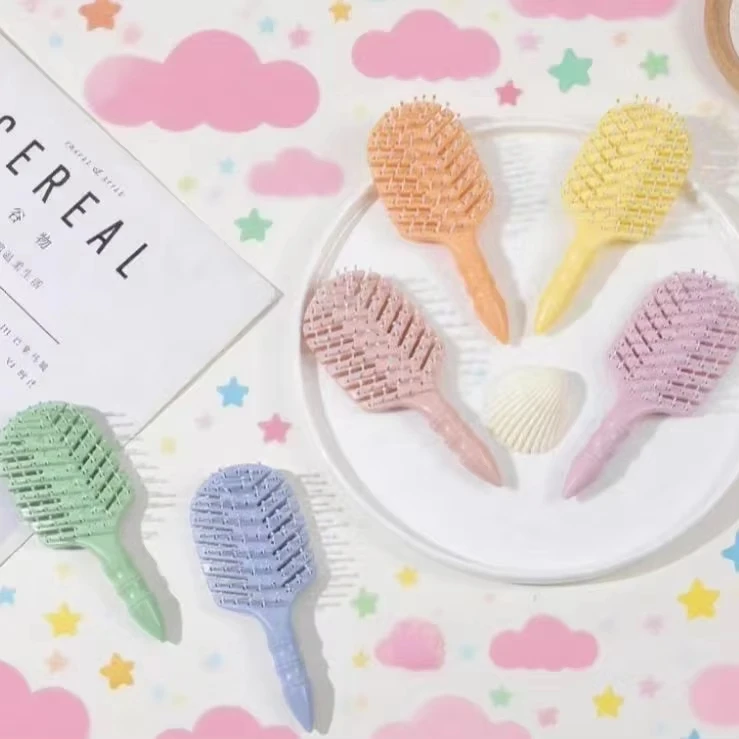
Understanding whether a mini hairbrush can achieve tangle-free grooming requires examining the biomechanics of hair detangling, the engineering principles behind compact brush design, and the realistic performance boundaries these tools operate within. While traditional full-sized brushes have established market presence, the emergence of portable grooming solutions raises important questions about whether size reduction compromises detangling effectiveness or whether thoughtful miniaturization can maintain functional performance while adding convenience benefits. This analysis explores the technical capabilities, design requirements, and practical applications that determine whether compact brushing tools can deliver genuinely tangle-free results across different user scenarios and hair conditions.
Engineering Principles Behind Tangle-Free Performance
Bristle Configuration and Detangling Mechanics
The ability of any mini hairbrush to provide tangle-free grooming fundamentally depends on bristle design parameters that influence how the tool interacts with hair strands during brushing motion. Bristle flexibility serves as the primary mechanical variable determining whether the brush can navigate through tangled sections without pulling or breaking hair. Nylon bristles with controlled flexibility ratings between 40 and 60 Shore A hardness allow sufficient give to bend around knots while maintaining enough structural integrity to separate entangled strands effectively. This flexibility range enables the mini hairbrush to distribute tension across multiple contact points rather than concentrating stress on individual hair shafts, which is essential for pain-free detangling in children and individuals with sensitive scalps.
Bristle spacing patterns directly affect detangling efficiency by controlling how many hair strands each bristle encounters during a stroke. A well-designed mini hairbrush typically employs spacing intervals between 3 and 5 millimeters, creating sufficient gaps for hair to flow through while ensuring adequate bristle density to capture and separate tangled sections. This spacing must be optimized for the compact brush head dimensions to maintain effectiveness despite the reduced surface area compared to full-sized alternatives. The geometric arrangement of bristles in offset or staggered patterns rather than simple grid layouts enhances the brush's ability to work through tangles progressively, with each successive row of bristles refining the detangling work initiated by previous rows.
Material Properties and Hair Interaction
The material composition of both bristles and the brush base significantly influences tangle-free performance through friction coefficients and static electricity generation. High-quality nylon bristles with polished tips reduce the friction coefficient between brush and hair to values typically below 0.3, minimizing the resistance that causes pulling sensations during detangling. This low-friction interaction allows the mini hairbrush to glide through hair sections with reduced mechanical resistance, which is particularly important when working with fine or chemically treated hair that has elevated fragility. The surface finish of bristle tips must be carefully controlled during manufacturing to eliminate sharp edges or burrs that could catch on hair cuticles and create additional tangling rather than resolving it.
Static electricity generation presents a secondary challenge that can interfere with tangle-free grooming by causing hair strands to repel each other or cling to the brush surface. Modern mini hairbrush designs often incorporate anti-static additives into the plastic base material or apply ionic coatings to bristles to neutralize charge buildup during brushing. These treatments reduce static-related flyaway and clumping effects that can make hair appear tangled even after thorough brushing. The effectiveness of anti-static features becomes especially critical in low-humidity environments or when grooming synthetic fiber hair extensions, where static charge accumulation occurs more readily than with natural hair under normal atmospheric conditions.
Ergonomic Design Impact on Control
A mini hairbrush can only deliver tangle-free results if the user can maintain precise control during the brushing motion, making ergonomic handle design a critical performance factor. Compact brushes typically feature handles between 8 and 12 centimeters in length, requiring careful shaping to ensure secure grip despite the reduced surface area available for hand contact. Contoured profiles with slight indentations for finger placement enable users to apply controlled, consistent pressure throughout the brushing stroke, which prevents the sudden jerking motions that cause discomfort when encountering resistant tangles. This control becomes particularly important when parents or caregivers use the mini hairbrush on children, as the compact size facilitates gentle, precise movements through delicate hair sections.
The weight distribution of a mini hairbrush affects the user's ability to maintain steady brushing angles and pressure levels throughout the grooming session. Optimal designs balance the weight between handle and brush head to create a neutral pivot point near the user's grip, reducing hand fatigue during extended detangling work. Lightweight construction using reinforced plastics typically yields total brush weights between 20 and 35 grams, light enough for comfortable extended use while providing sufficient mass for the brush to assist with detangling work rather than requiring excessive user force. This weight optimization enables more fluid brushing motions that work with rather than against the natural hair flow patterns, contributing to the overall tangle-free grooming experience.
Hair Type Compatibility and Performance Boundaries
Fine and Straight Hair Considerations
Fine, straight hair presents specific challenges for mini hairbrush performance due to the tendency of these hair types to tangle easily while simultaneously being more susceptible to breakage from excessive mechanical stress. A properly designed mini hairbrush for fine hair requires bristle tips with rounded ball ends measuring approximately 0.5 millimeters in diameter to distribute contact pressure across a larger surface area of each hair strand. This design feature prevents the bristles from cutting into individual hair fibers, which would create split ends and increase future tangling propensity. The spacing between bristles must be adjusted toward the narrower end of the optimal range to ensure adequate capture of fine strands that might otherwise slip between more widely spaced bristles without being properly detangled.
The detangling approach for fine hair using a mini hairbrush requires starting from the ends and progressively working toward the roots in sections, with the compact brush size actually providing an advantage by preventing users from attempting to brush through too much hair volume at once. This sectioning capability allows the mini hairbrush to address tangles in manageable portions, reducing the total mechanical load on any individual hair strand. When used with this methodical technique, a quality mini hairbrush can achieve genuinely tangle-free results on fine hair by maintaining gentle, consistent tension rather than the pulling force that occurs when larger brushes encounter resistance across their entire width simultaneously.
Curly and Textured Hair Applications
Curly and textured hair types require fundamentally different bristle characteristics in a mini hairbrush to achieve tangle-free grooming without disrupting the natural curl pattern or causing frizz. Flexible bristles with greater length, typically extending 12 to 15 millimeters from the brush base, allow the mini hairbrush to penetrate through curl layers and work on tangles at the root level without compressing or straightening the curl structure. The bristle flexibility must be calibrated to bend around tight curl formations rather than attempting to pull curls straight, which would create tension that feels like painful pulling to the user. Wide bristle spacing, toward the 5-millimeter end of the optimal range, prevents the mini hairbrush from creating a combing effect that would separate individual curl segments excessively.
Detangling performance on curly hair using a mini hairbrush is significantly enhanced when the hair is damp or has been treated with conditioning products that provide slip, reducing inter-strand friction. The compact size of a mini hairbrush proves advantageous for curl-specific detangling because it allows precise targeting of problem areas without disturbing successfully detangled sections. Users can work through individual curl clumps methodically, using the mini hairbrush to gently separate tangled sections while maintaining curl definition. This targeted approach contrasts with full-sized brush use, which often requires brushing through the entire hair section and can disrupt curl patterns in areas that were not actually tangled, leading to unnecessary frizz and loss of definition.
Children's Hair and Scalp Sensitivity
The application of a mini hairbrush for children's grooming represents a particularly important use case where tangle-free performance must be balanced with extreme gentleness to avoid creating negative associations with hair care routines. Children's hair typically exhibits finer diameter strands and a more delicate scalp than adult hair, requiring bristle pressure distribution that limits contact force to values below the pain threshold while still providing effective detangling. A well-designed mini hairbrush for pediatric use incorporates soft bristle tips with durometer ratings at the lower end of the effective range and employs a cushioned brush base that allows the entire bristle array to flex inward when encountering resistance, further reducing the force transmitted to the scalp.
The compact dimensions of a mini hairbrush create psychological advantages when grooming children by appearing less intimidating than full-sized brushes and allowing children to participate more easily in their own hair care. The reduced brush head size enables parents to work through small sections of tangled hair with greater precision, spending less total time on problem areas by addressing them directly rather than repeatedly brushing through larger sections. This efficiency reduces the overall duration of potentially uncomfortable detangling sessions, making the experience more tolerable for children with tangle-prone hair. When properly engineered, a mini hairbrush can genuinely provide tangle-free results for children while maintaining comfort levels that support positive grooming habit development.
Design Features That Enable Tangle-Free Functionality
Scalp Massage Integration
Advanced mini hairbrush designs incorporate scalp massage functionality that contributes indirectly to tangle-free grooming by stimulating blood circulation and distributing natural scalp oils through the hair shaft. Bristle arrangements that include varied lengths create a massaging effect as the brush moves across the scalp, with longer bristles reaching deeper to contact the scalp surface while shorter bristles work through the hair bulk. This massage action serves a dual purpose of making the grooming experience more pleasant while potentially improving hair health through enhanced follicle nutrition. The compact form factor of a mini hairbrush allows users to apply more targeted massage pressure to specific scalp areas compared to larger brushes, which distribute pressure more broadly and may miss concentrated tension points.
The relationship between scalp massage and detangling effectiveness stems from the way massage action helps redistribute sebum from the scalp along hair shafts, providing natural lubrication that reduces inter-strand friction. A mini hairbrush with properly designed massage bristles can facilitate this oil distribution more effectively than brushes with uniform bristle configurations because the varied lengths create multiple contact points along different hair shaft sections. This natural conditioning effect accumulates over regular use, gradually improving the hair's inherent resistance to tangling by maintaining the cuticle layer smoothness that prevents strands from mechanically interlocking. Users who employ a mini hairbrush with integrated massage features typically report reduced tangling frequency over time as the cumulative benefits of improved scalp health manifest in better hair condition.
Ventilation and Air Flow Properties
Ventilation design in the mini hairbrush base influences tangle-free performance through multiple mechanisms related to hair drying and styling workflow integration. Brushes with vented bases featuring air channels that pass through the brush pad allow airflow during blow-drying, enabling simultaneous detangling and drying activities. This integration reduces total grooming time and minimizes the number of passes required through the hair, which correspondingly reduces mechanical stress and potential breakage that can lead to increased tangling in subsequent grooming sessions. The compact size of a mini hairbrush with ventilation features makes it particularly suitable for targeted drying and smoothing of problem areas where tangles tend to form, such as the nape of the neck or behind the ears.
Air circulation through a vented mini hairbrush also reduces moisture accumulation on the brush itself, preventing the bacterial growth and material degradation that can compromise bristle performance over the product lifetime. Brushes that retain moisture between uses may develop uneven bristle flexibility as materials absorb water and lose their engineered mechanical properties, leading to inconsistent detangling performance. The ventilation design ensures rapid drying after cleaning, maintaining the precise bristle characteristics that enable tangle-free grooming. This hygiene advantage becomes particularly important in high-humidity environments or when the mini hairbrush is frequently cleaned to maintain sanitary conditions in professional or shared-use settings.
Portable Design and Usage Context
The portable nature of a mini hairbrush extends its tangle-free grooming capability by enabling touch-up detangling throughout the day rather than limiting hair care to dedicated grooming sessions. This portability allows users to address tangles as they form, before they develop into more complex knots that require aggressive brushing to resolve. The compact size makes the mini hairbrush practical to carry in purses, backpacks, or desk drawers, facilitating the preventive approach to tangle management rather than reactive correction. This usage pattern proves particularly valuable for individuals with hair types prone to rapid tangling in response to environmental factors like wind exposure or hat wearing, as immediate touch-up brushing can maintain tangle-free condition throughout the day.
The practical accessibility of a mini hairbrush influences user compliance with recommended brushing frequency, which directly impacts overall hair condition and tangle resistance. When grooming tools are conveniently available, users are more likely to brush their hair multiple times daily using proper technique rather than resorting to rushed, aggressive brushing when tangles have already reached problematic levels. This behavioral advantage of the mini hairbrush format contributes to the perception of tangle-free grooming by maintaining hair in a consistently well-groomed state rather than cycling between tangled and freshly brushed conditions. The cumulative effect of frequent, gentle brushing using an accessible mini hairbrush often proves more effective for long-term tangle prevention than less frequent sessions with larger brushes that may not be readily available when needed.
Practical Application Scenarios and Effectiveness
Travel and On-the-Go Grooming
Travel scenarios represent a primary application context where the mini hairbrush must demonstrate reliable tangle-free performance under conditions that often exacerbate hair tangling. Airplane cabin environments with low humidity, hotel rooms with different water mineral content affecting hair texture, and exposure to unfamiliar climate conditions all contribute to increased tangling propensity during travel. A quality mini hairbrush addresses these challenges by providing consistent detangling capability in a format that meets airline carry-on size restrictions and packs efficiently in luggage without the bulk of full-sized grooming tools. The ability to maintain tangle-free hair condition during travel prevents the accumulation of knots that could become severe enough to require professional grooming intervention or cause significant discomfort.
The effectiveness of a mini hairbrush for travel applications depends on its durability under frequent packing and unpacking cycles that could damage bristles or compromise the handle integrity. High-quality construction using reinforced plastics and securely anchored bristles ensures the brush maintains its detangling performance characteristics throughout extended travel periods. Some mini hairbrush designs include protective covers that shield bristles during transport, preventing deformation that would reduce effectiveness when the brush is actually needed. This attention to travel-specific design requirements enables the mini hairbrush to serve as a reliable tangle-free grooming solution rather than merely a backup tool with compromised performance compared to home grooming equipment.
Professional Salon and Styling Applications
Professional hair stylists utilize mini hairbrush tools for precision detangling work during cutting, coloring, and styling procedures where full-sized brushes would be too cumbersome for detailed sectioning work. The compact dimensions of a mini hairbrush allow stylists to isolate specific hair sections for treatment while maintaining tangle-free condition in adjacent areas that have already been processed. This precision capability reduces the risk of disturbing completed work during subsequent styling steps, improving overall service quality and efficiency. Professional-grade mini hairbrush designs often feature enhanced durability specifications to withstand the frequent use and chemical exposure characteristic of salon environments, maintaining consistent detangling performance through hundreds of client applications.
The integration of mini hairbrush tools into professional workflows demonstrates their capacity to provide genuinely tangle-free results even in demanding applications where hair has been chemically altered or heat-styled. Stylists rely on these compact tools particularly when working with children's haircuts, where the smaller brush size proves less intimidating and allows more controlled detangling during cuts. The professional validation of mini hairbrush effectiveness provides important evidence that these tools can deliver performance comparable to full-sized alternatives when properly designed, rather than representing a compromise solution with inherently limited capability. This professional adoption pattern indicates that the mini hairbrush format has achieved technical maturity sufficient for applications where grooming tool performance directly impacts service quality and client satisfaction.
Pediatric Care and Special Needs Grooming
Pediatric care settings including daycare centers, schools, and medical facilities require grooming tools that can provide tangle-free results while accommodating the sensitivity and compliance challenges characteristic of young children. A mini hairbrush designed for these applications must deliver effective detangling with minimal discomfort to prevent negative associations that could lead to grooming resistance. The compact size facilitates caregiver control during grooming sessions with children who may be uncooperative or unable to remain still, allowing quick, efficient detangling work that minimizes the duration of potentially stressful hair care activities. Special attention to handle ergonomics enables caregivers to maintain precise brush control even when working with moving targets, reducing the risk of painful pulling incidents that could traumatize children and complicate future grooming sessions.
Children with sensory processing sensitivities or developmental differences often experience standard grooming as particularly challenging due to heightened sensitivity to tactile stimulation and difficulty tolerating the time required for thorough detangling. A mini hairbrush engineered with extremely soft bristles and cushioned base construction can provide tangle-free grooming results while staying within the sensory tolerance threshold for these sensitive users. The reduced brush head size allows caregivers to work through very small hair sections, distributing the detangling process across many gentle strokes rather than attempting to resolve tangles with fewer, more forceful brushing motions. This adaptive approach enabled by the mini hairbrush format has proven effective in special education and therapeutic settings where traditional grooming tools failed to provide acceptable solutions for children with significant sensory sensitivities.
Performance Optimization and Best Practices
Proper Brushing Technique for Maximum Effectiveness
Achieving genuinely tangle-free grooming with a mini hairbrush requires applying proper technique that leverages the tool's design characteristics while avoiding common mistakes that compromise performance. The fundamental principle involves starting brushing from the hair ends and progressively working toward the roots in overlapping sections, which prevents pushing tangles downward and compacting them into more difficult knots. When using a mini hairbrush, this sectioning approach proves particularly effective because the compact brush head naturally limits the hair volume addressed in each stroke, preventing users from attempting to brush through excessive thickness at once. Each brushing section should overlap the previous section by approximately one-third to ensure complete tangle resolution without leaving unaddressed areas between strokes.
The angle and pressure applied during mini hairbrush use significantly affect detangling outcomes, with optimal technique requiring the brush to follow the natural hair growth direction rather than forcing strands against their curvature pattern. Light to moderate pressure, sufficient to maintain bristle contact with hair throughout the stroke but not so heavy as to cause the bristles to fully compress against the scalp, provides the best balance between detangling effectiveness and comfort. When encountering resistant tangles, the proper technique involves holding the hair section above the tangle to isolate the knot and prevent pulling tension from transmitting to the scalp, then working through the tangle with short, gentle strokes rather than attempting to force the mini hairbrush through the obstruction in a single pass. This patient approach enables the brush to progressively separate tangled strands without causing breakage or discomfort.
Maintenance and Performance Preservation
The long-term ability of a mini hairbrush to provide tangle-free grooming depends on proper maintenance practices that preserve bristle integrity and cleanliness. Regular cleaning to remove accumulated hair, skin oils, and styling product residue prevents buildup that can alter bristle flexibility and create uneven surface textures that catch on hair strands rather than gliding smoothly. The recommended cleaning frequency for daily-use mini hairbrush applications ranges from weekly to bi-weekly, depending on hair type and styling product usage patterns. Effective cleaning involves removing trapped hair strands, washing the brush with mild shampoo solution, and allowing complete drying before reuse to prevent material degradation from moisture exposure.
Bristle condition monitoring enables users to identify when a mini hairbrush has reached the end of its effective service life and requires replacement to maintain tangle-free performance. Signs of declining effectiveness include bristle tips that have become rough or developed burrs from wear, bristles that have bent permanently and no longer spring back to their original position, and loose bristles that pull free from the brush base during normal use. Quality mini hairbrush designs typically maintain effective performance for six to twelve months under regular daily use before replacement becomes necessary, though this lifespan varies based on usage intensity and hair characteristics. Replacing the mini hairbrush when performance indicators suggest degradation ensures consistent tangle-free grooming capability rather than allowing gradual decline to compromise results.
Complementary Products and Techniques
While a properly designed mini hairbrush can provide tangle-free grooming independently, combining brush use with appropriate conditioning products enhances overall effectiveness by reducing inter-strand friction and improving hair flexibility. Leave-in conditioners and detangling sprays modify hair surface properties to decrease the mechanical resistance encountered during brushing, allowing the mini hairbrush to work through tangles with less force and reduced risk of breakage. These complementary products prove particularly valuable when addressing severe tangles or working with hair types that have inherently high friction coefficients, such as very dry or chemically damaged hair. The synergy between product preparation and mini hairbrush technique enables tangle-free results in situations where brushing alone might prove insufficient or cause excessive discomfort.
The integration of a mini hairbrush into a comprehensive hair care routine that includes appropriate washing frequency, conditioning treatment, and protective styling contributes to long-term tangle prevention rather than merely reactive tangle resolution. Hair that receives proper moisture balance through conditioning retains cuticle smoothness that prevents the mechanical interlocking responsible for tangle formation, reducing the severity of tangling that the mini hairbrush must address. Regular brushing using proper technique with a quality mini hairbrush distributes natural oils along hair shafts, providing ongoing conditioning that improves hair manageability between washing cycles. This holistic approach to tangle prevention, with the mini hairbrush serving as a key tool within the broader regimen, proves more effective than relying solely on brushing to address tangles after they have already formed through neglect of other hair care fundamentals.
FAQ
How does a mini hairbrush compare to full-sized brushes for detangling performance?
A properly engineered mini hairbrush can match full-sized brush detangling performance through optimized bristle configuration and spacing that compensates for the reduced brush head dimensions. The compact size actually provides advantages for targeted detangling work and precise control, particularly when working with children's hair or addressing localized tangle areas. The key performance factor is design quality rather than size, with well-made mini brushes delivering results comparable to larger alternatives while offering superior portability and ease of use in specific applications. Users should select based on their primary use case, with mini brushes excelling in travel, touch-up grooming, and situations requiring precise sectioning control.
What hair types benefit most from using a mini hairbrush?
Mini hairbrush tools provide particular benefits for fine to medium hair textures where the compact dimensions allow thorough detangling without overwhelming the hair volume or causing excessive static buildup from over-brushing large sections. Children's hair regardless of texture responds well to mini brush use due to the gentler, more controlled application possible with smaller tools. Individuals with curly or textured hair can effectively use mini brushes for targeted detangling of specific curl sections when the bristle configuration includes appropriate flexibility and spacing for curl penetration. The mini hairbrush format proves less suitable for very thick, coarse hair types where the limited brush head coverage would require excessive time to work through the entire hair volume, though even these users may find mini brushes valuable for touch-up work and travel applications.
Can regular use of a mini hairbrush damage hair or cause breakage?
When used with proper technique and appropriate bristle pressure, a quality mini hairbrush does not cause hair damage or excessive breakage compared to other grooming methods. The key protective factors include starting from hair ends and working toward roots, using gentle pressure that allows bristles to flex rather than rigidly pulling through resistance, and maintaining the brush in clean condition to prevent buildup that could create rough surfaces. Brushes with rounded bristle tips and appropriate flexibility actually reduce breakage risk compared to combs or poorly designed brushes by distributing tension across multiple contact points rather than concentrating force on individual hair strands. Any grooming tool can cause damage if used aggressively or on severely tangled hair without proper sectioning and gradual detangling approach, but the mini hairbrush format itself does not inherently increase damage risk when quality construction and proper usage are maintained.
How often should a mini hairbrush be replaced to maintain optimal performance?
The replacement interval for maintaining optimal mini hairbrush performance typically ranges from six to twelve months with regular daily use, depending on hair type, brushing frequency, and maintenance quality. Performance indicators suggesting replacement need include bristle tips that feel rough rather than smooth, permanent bristle bending that prevents the brush from returning to its original shape, and bristles that pull loose from the base during normal use. Users with thick or curly hair who brush frequently may need to replace mini brushes toward the shorter end of this range due to the higher mechanical stress imposed during grooming, while those with fine hair and less frequent use may extend the replacement interval toward the longer end. Regular cleaning and proper storage extend mini hairbrush service life by preventing accelerated material degradation, but all brushes eventually require replacement as bristle materials naturally wear from repeated flexing and contact with hair surfaces.